
You may remember that we had our neighbors over for an afternoon goûter (snack) in the middle of January. In return, they invited us for dinner in the middle of February, and a lovely time was had by all. At the dinner, they surprised me with a birthday present: three books, all recommended highly by Mo and Héloise. (I'm sure their three boys will like these books too, but for now they're too young to read them.) Having just finished the third one, and never having gotten into the whole goodreads.com thing, I thought I'd mention them here.
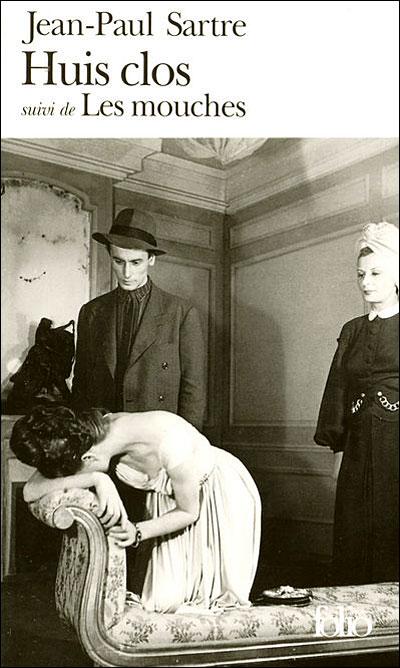
I'm not sure why these two plays by Sartre were published together (maybe because they were published in 1944 and 1943, respectively), but I am sure that I enjoyed reading them much more than I expected. (Doesn't "Sartre" conjure up anxiety about heavy, difficult-to-understand reading? It did for me. But no more.) Huis clos (translated in English as No Exit) puts three guilty people in a recognizable (albeit reimagined) place and lets us watch their inevitable conflict. Les mouches (The Flies) is a retelling of the Electra myth (previously treated by Sophocles, Aeschylus, Euripides, and Richard Staruss) through a (you guessed it) existentialist lens. If that doesn't get you all excited, read the play anyway, its energy and power merit a much more breathless description.

With its deceptively simple title (A French Novel), the second book proved more difficult but, at the same time, was also lighter reading than the Sartre. Frédéric Beigbeder won the 2009 Prix Renaudot for this almost painfully autobiographical work that starts with his arrest for sniffing cocaine off the hood of a car. The author uses the incident - and his ensuing two-night imprisonment - to explore the reasons for his inability to remember anything about his admittedly privileged childhood. His narrative mixes idyllic flashbacks with harsh critiques of the French criminal justice system, his prose is completely contemporary, and his sarcasm reminds me of Chuck Palahniuk (who, now that I think about it, also structures books so that the end comes right at the beginning). One of the great things about this book is its short (3-4 page) chapters, which make it easy for a non-native-French speaker to sustain interest. In this respect Beigbeder does not equal Victor Hugo, and I am grateful for that.
As an aside: one of our favorite American-in-Paris bloggers noticed that the covers of French books tend to be extremely simple, and Un roman français is a great example.

Finally, I read this novella on my way to and from a single rehearsal, it's that short. Originally published in English in 1938 (funny that I should read it in French translation), Inconnu à cette adresse (Address unknown) constitutes an exchange of letters between German business partners originally living in San Francisco. The exchange begins when Martin, who is not Jewish, returns to Germany with his family in 1932, while Max, who is Jewish, stays behind to run the business. Over the next two years, their close friendship breaks down under the strain of the sinister changes German society experiences under National Socialism and Adolph Hitler. The author, Katherine Kressman Taylor, based parts of the book on actual letters sent by Americans in Germany during the 1930s. We don't often hear about the extent to which Americans knew what was going on in Germany during the buildup to the Holocaust, and it's moving to get a contemporary glimpse from someone who had no personal stake in the violence, but who clearly felt its effects.
I'd like to take this opportunity to thank Mo & Co. (which is a decent band name, should the boys ever decide to take up guitar and drums) for their generosity and thoughtfulness. And to anyone who's looking for good reads in French or English, I highly recommend these three books!


 Posts
Posts


No comments:
Post a Comment
Note: Only a member of this blog may post a comment.